
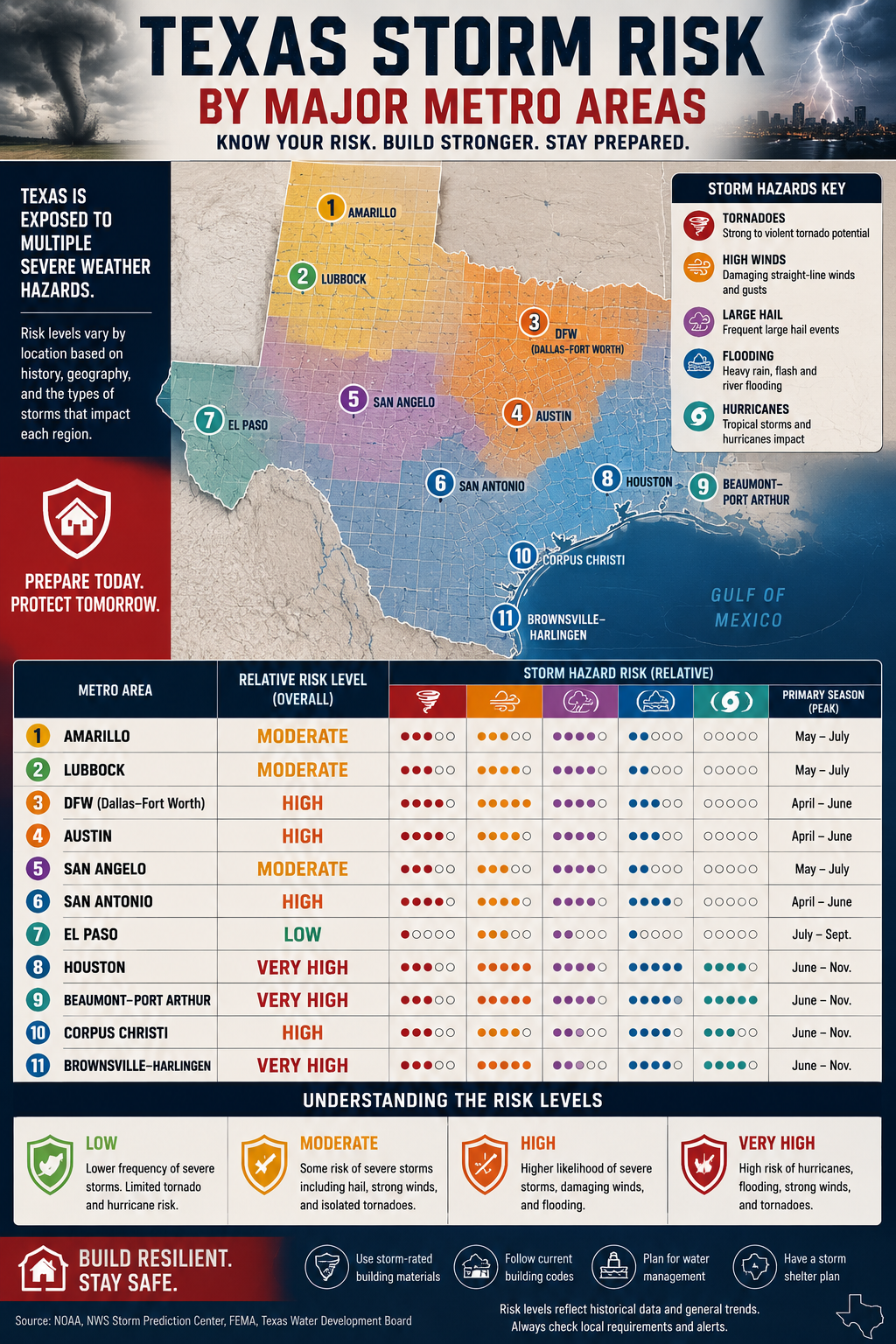
Texas faces an unusually broad range of severe weather threats because of its enormous size, varied geography, and proximity to the Gulf of Mexico. Tornadoes, destructive straight-line winds, severe thunderstorms, large hail, hurricanes, flash flooding, and extreme temperatures can all threaten homes and businesses across the state. North and Central Texas frequently experience powerful thunderstorms capable of producing tornadoes, damaging winds, and large hail, while other parts of the state face their own combinations of severe weather. These events can develop rapidly, placing tremendous pressure on roofs, walls, windows, doors, garages, and structural connections.
Along the Texas Gulf Coast, hurricanes and tropical storms create another level of risk. Communities in and around Houston, Galveston, Corpus Christi, Beaumont–Port Arthur, and the Rio Grande Valley can be exposed to hurricane-force winds, wind-driven rain, storm surge, and major flooding. Tropical systems can also carry destructive weather far inland. Flooding is not limited to the coast: intense thunderstorms can produce dangerous flash floods across Central Texas and other areas, overwhelming drainage systems and causing extensive damage to homes, roads, and infrastructure.
Windborne debris and hail can be especially destructive to buildings. During severe storms, broken branches, roofing materials, signs, and other objects can become projectiles that damage windows, doors, siding, and roofs. Once the exterior building envelope is breached, wind and water can enter the structure and dramatically increase the potential for damage. Large hail can destroy roofing materials and exterior components even when the main structure remains intact.
These risks make resilient construction especially important in Texas. There is no home that can be guaranteed to survive every possible storm, but structures can be engineered and built to substantially improve their ability to withstand the hazards expected at a particular location. Strong foundations, continuous load paths, reinforced structural connections, high-wind-rated roofing, protected openings, effective drainage, flood-conscious site design, and properly designed storm shelters can all contribute to a safer building. Texas weather can be extreme. Building for Texas means designing for the conditions that could come—not simply the conditions outside today.