
Top 5 FAQs About Storms in Austin, Texas
1. What are the biggest storm risks in Austin, Texas?
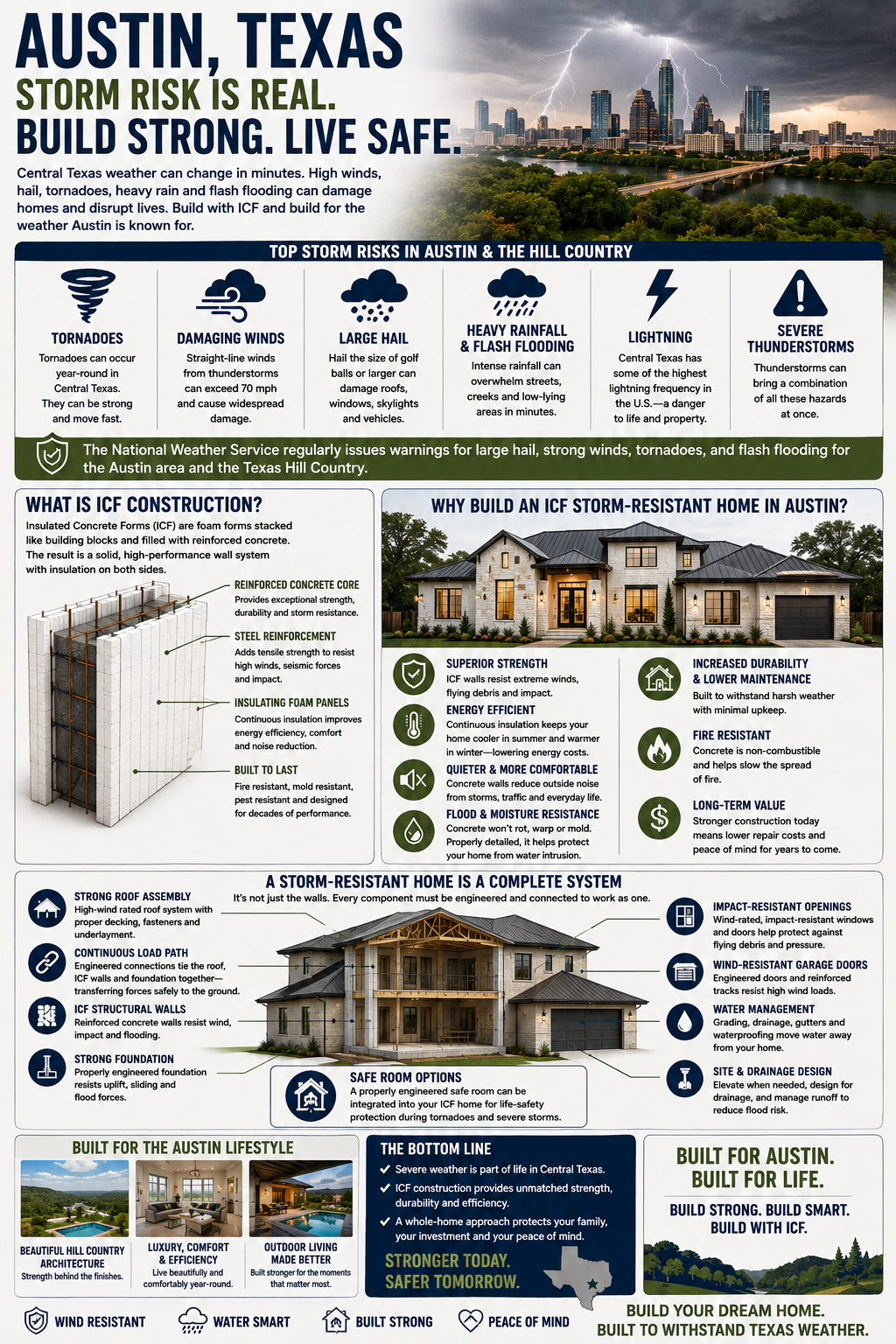
Austin and Central Texas can experience severe thunderstorms, damaging straight-line winds, large hail, tornadoes, dangerous lightning, torrential rainfall, and flash flooding. The National Weather Service classifies thunderstorms as severe when they produce hail at least 1 inch in diameter or wind gusts of at least 58 mph. (National Weather Service)
2. Is flash flooding a serious concern in Austin?
Yes. Flash flooding is one of Austin’s most significant storm hazards. Intense rainfall can quickly overwhelm creeks, roads, drainage systems, and low-lying areas. In June 2026, the National Weather Service issued a Flash Flood Warning that included northern Travis County, with a “considerable” flash-flood damage threat. (National Weather Service)
3. Does Austin have a tornado risk?
Yes. Tornadoes are possible in Austin and throughout Central Texas, particularly when powerful severe-thunderstorm systems move through the region. NWS Austin/San Antonio severe-weather outlooks routinely consider tornadoes alongside large hail and damaging straight-line winds. (National Weather Service)
4. How serious are hail and damaging winds around Austin?
Both are important threats. Severe thunderstorms can produce winds strong enough to damage roofs, siding, trees, windows, and other building components, while large hail can damage roofing, skylights, windows, HVAC equipment, and vehicles. In May 2026, for example, an NWS warning in neighboring Williamson County called for 1.5-inch hail and 60-mph wind gusts. (National Weather Service)
5. How can an Austin home be better prepared for severe storms?
A storm-resistant Austin home should be designed around both wind and water. Depending on the site and engineering, that can include reinforced structural construction such as ICF, a continuous load path connecting the roof, walls, and foundation, stronger roof assemblies, appropriately rated windows and exterior doors, strengthened garage doors, impact-resistant roofing, and carefully engineered grading, drainage, and waterproofing. A properly engineered tornado safe room can provide an additional level of life-safety protection. The objective isn’t to promise a completely “storm-proof” house—it is to build a stronger, more resilient home specifically for the severe-weather realities of Austin and the Texas Hill Country.