Building A Storm Resistant Home

What Goes Into Building a Storm-Proof ICF Home in Texas?

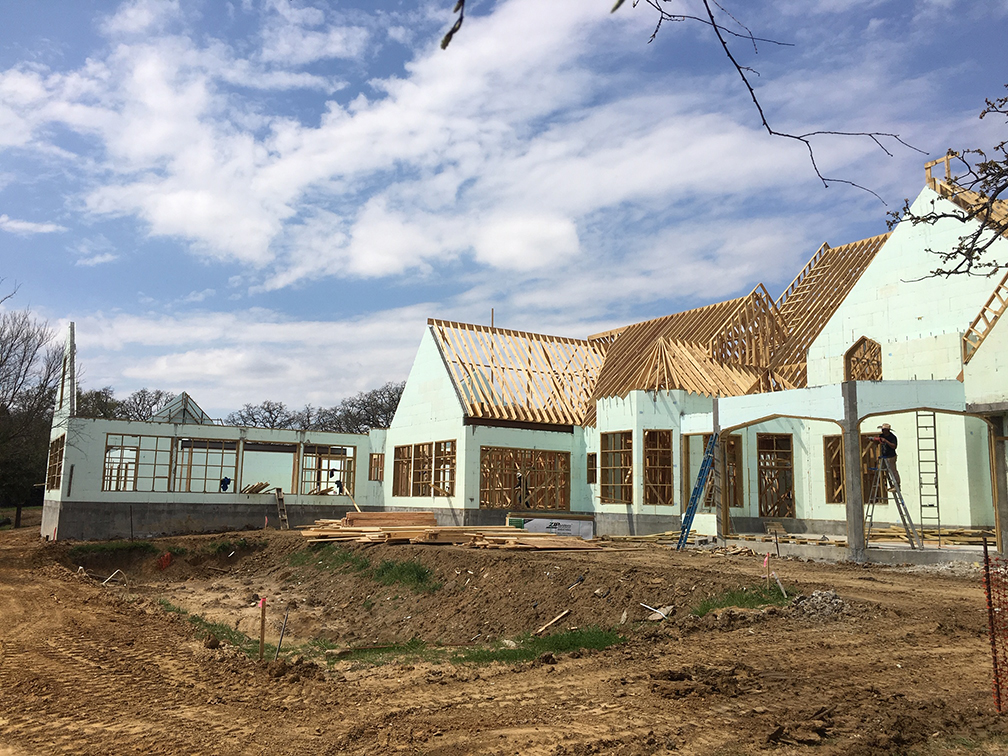
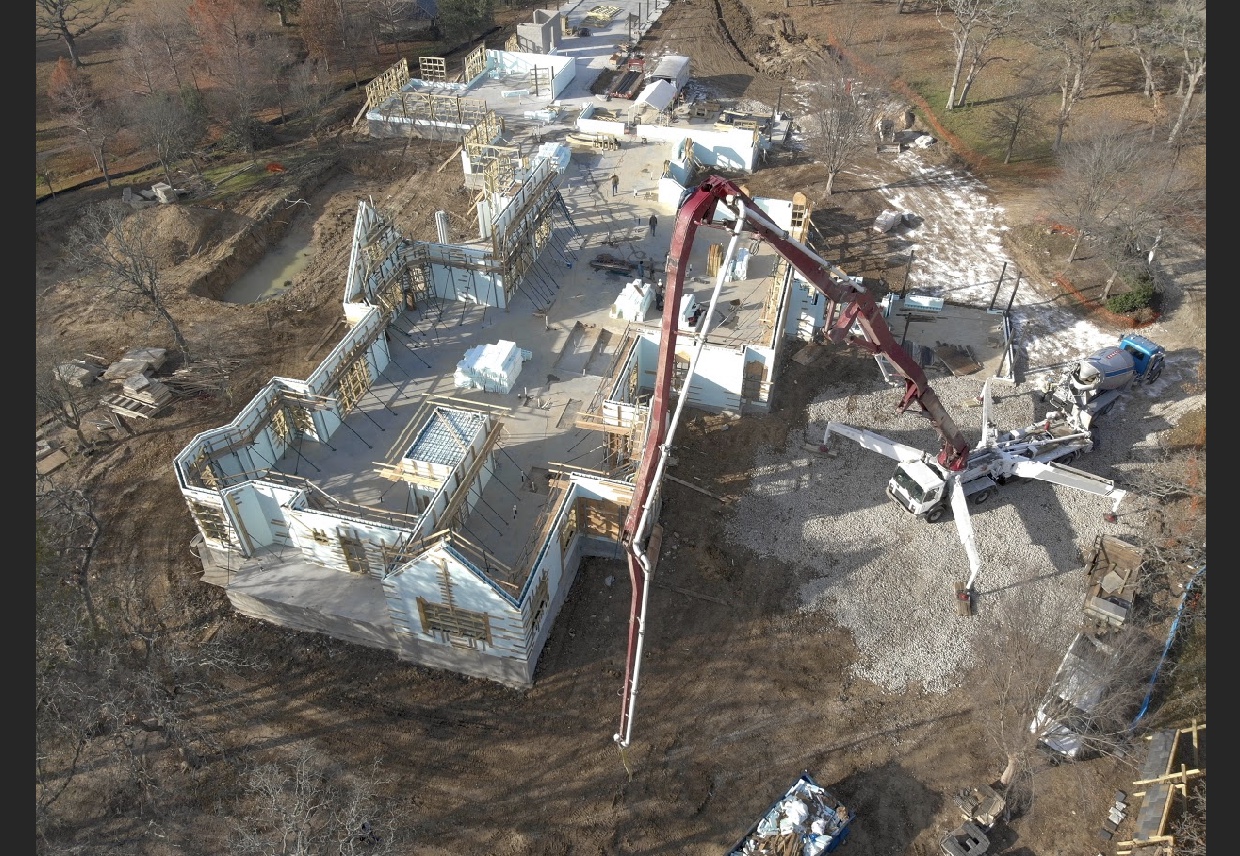
Building a storm-resistant ICF home in Texas starts with much more than simply pouring concrete walls. Insulated Concrete Form (ICF) construction creates a reinforced concrete structural wall surrounded by continuous insulation, providing a strong foundation for a resilient home, but the entire structure must be engineered to work together. This includes a properly designed foundation, reinforced ICF walls, steel reinforcement, a continuous load path connecting the roof to the walls and the walls to the foundation, a high-wind-resistant roof assembly, properly engineered roof-to-wall connections, and appropriately rated windows, exterior doors, and garage doors. Depending on the location, the design should address the specific Texas hazards the property may face, including tornadoes, hurricanes, extreme winds, windborne debris, hail, heavy rainfall, flash flooding, and coastal storm conditions.

True storm resilience also requires careful attention to the parts of the home that can become vulnerable during severe weather. Impact-resistant openings, enhanced roof-deck attachment, durable exterior materials, flashing, waterproofing, grading, drainage, and flood-conscious site design can all play important roles. A properly engineered tornado or hurricane safe room can also be incorporated for an additional level of life-safety protection. Most importantly, an ICF home should be designed by qualified professionals around the property’s location and applicable building requirements rather than relying on ICF walls alone. No home can be guaranteed completely “storm proof,” but when reinforced ICF construction, structural engineering, stronger connections, protected openings, water management, and quality workmanship are combined, Texas homeowners can create a substantially stronger and more resilient home built for the extreme weather conditions the state can deliver.
The Benefits of ICF Building in Texas

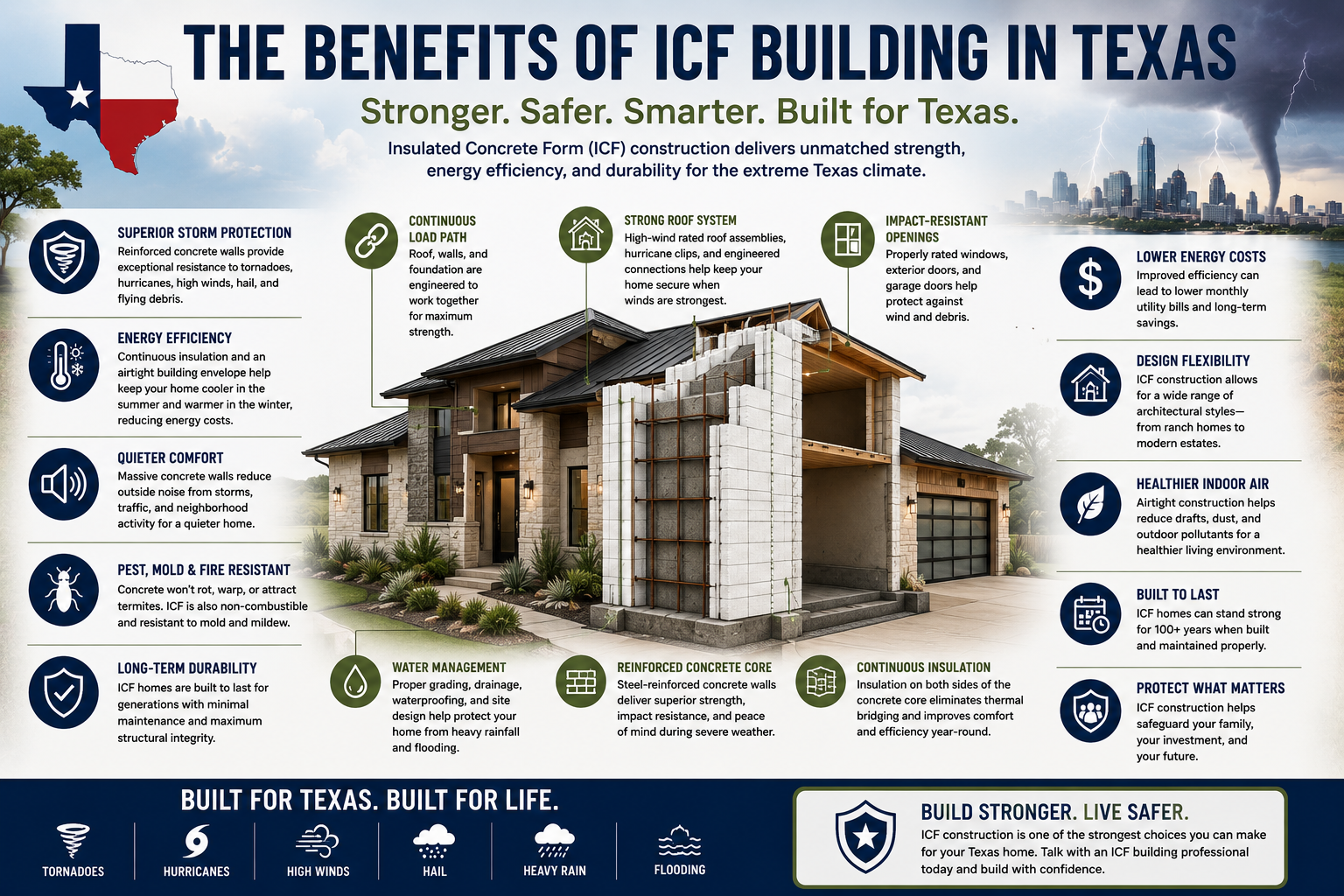
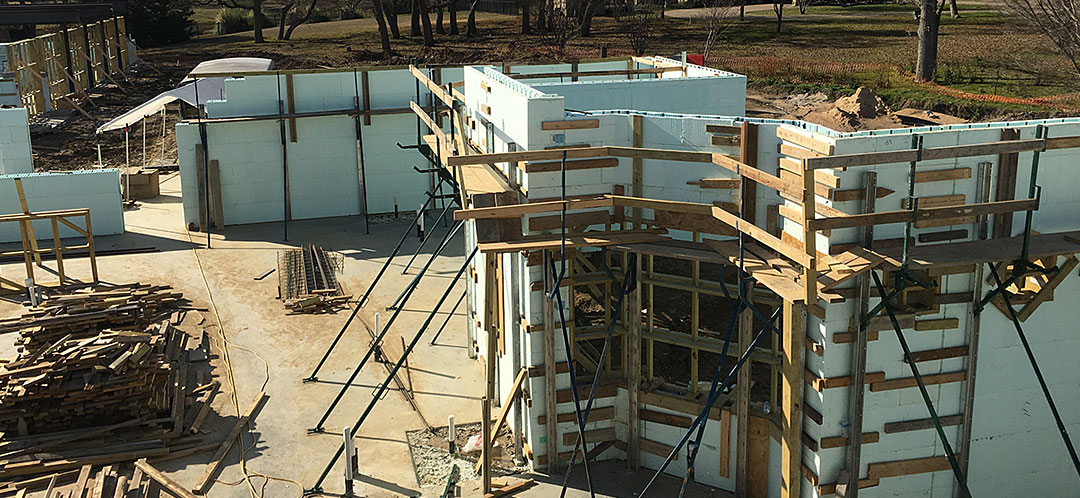
Insulated Concrete Form (ICF) construction offers Texas homeowners a powerful combination of strength, energy efficiency, durability, comfort, and storm resilience. ICF walls are built with reinforced concrete surrounded by continuous insulation, creating a substantial structural envelope that can be especially attractive in a state exposed to tornadoes, hurricanes, severe thunderstorms, extreme winds, flying debris, hail, and intense heat. When properly engineered as part of a complete building system, ICF walls can provide exceptional resistance to wind forces and debris impacts. The solid concrete construction also offers excellent durability, resistance to rot and termites, and significant sound reduction—helping create a quieter interior during thunderstorms, heavy winds, and everyday neighborhood noise.

ICF construction is also particularly well suited to the extreme Texas climate. Continuous insulation and reduced air leakage can help stabilize indoor temperatures and reduce the amount of work required from heating and cooling systems during scorching Texas summers and sudden winter cold. That can contribute to improved comfort and potentially lower energy consumption when the entire home is properly designed. ICF also gives homeowners tremendous architectural flexibility: a strong concrete structure can be finished with brick, stone, stucco, siding, or contemporary exterior materials, allowing everything from a traditional Texas ranch to a modern luxury estate to benefit from reinforced construction. For homeowners building in Dallas–Fort Worth, Houston, Austin, San Antonio, the Gulf Coast, or elsewhere in Texas, ICF provides an opportunity to build beyond conventional expectations—creating a home designed not only for greater storm resilience, but for long-term strength, efficiency, comfort, quiet, and durability.

about Us

Texas Storm Resistant Homes designs and builds custom ICF homes engineered to withstand Texas’s toughest weather while delivering luxury, energy efficiency, and lasting value.